Did you buy a new electric vehicle that started malfunctioning right after you drove it off the lot? You might want to know if consumer protection laws apply to EVs. The answer is yes: Arizona’s EV lemon law protections can apply to electric vehicles just as they do to other qualifying motor vehicles. It’s not the legal protection that changes, but rather the types of defects you might encounter.
The most common issues range from battery failures and defective charging systems to persistent software problems. Regardless of the situation, learn how EV protections work in Arizona and what applies to used EVs. This will help you determine whether your case warrants contacting a lawyer.
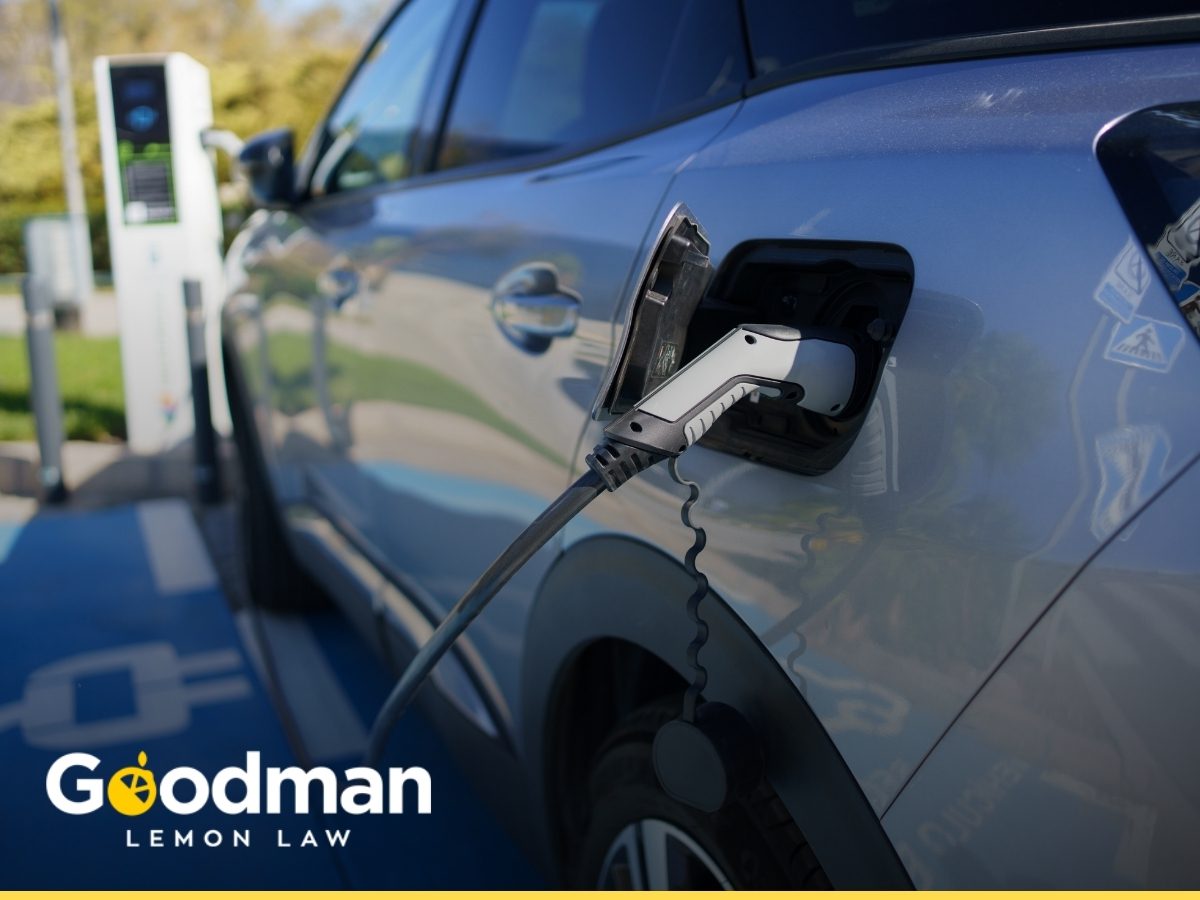
Yes — Electric Cars Can Be Lemons Under Arizona Law
It is important to clarify that the Arizona Motor Vehicle Warranties Act does not create a specific exclusion for electric vehicles. When the law refers to a “motor vehicle,” it legally means a self-propelled vehicle designed to transport people or goods on public roads. An EV falls under this law if it meets all other applicable requirements.
Can electric cars be “lemons”? The answer is not solely a matter of the vehicle’s technology. A legal question must be asked: Is there a defect covered by the warranty that affects the vehicle’s use, value, or safety? If so, has it been resolved after several reasonable attempts? If the answer is no, there may be grounds for action.
What Arizona’s Lemon Law Covers
Arizona law provides certain protections for new vehicles during the applicable period. It generally stipulates that the consumer must report a “lack of conformity” within the shorter of the term of the express warranty or two years or 24,000 miles following the original delivery.
If this has occurred and the manufacturer fails to remedy a defect that meets the legal requirements, there may be several remedies available:
- Repair of the defect.
- Replacement of the vehicle.
- Refund of the purchase price.
The exact remedy depends on the circumstances of each case. Especially when you contact a lemon law attorney for cars in AZ.
How the Federal Magnuson-Moss Warranty Act Applies to EVs
The Magnuson-Moss Warranty Act may apply if there is a written or implied warranty in effect. This federal law provides certain mechanisms for consumers to enforce specific warranties. When the requirements are met, it may allow for the recovery of costs and reasonable attorneys’ fees if the consumer prevails.
Are you trying to determine if you have an electric vehicle lemon law claim? You shouldn’t assume that there’s only a state-level avenue. There are federal protections you can consider.
Why EV Owners Assume They Are Not Covered
There are two reasons why EV owners often mistakenly believe they are not covered by the lemon law:
- The way defects are repaired. Since electric cars are typically diagnosed and repaired remotely through software updates, owners do not accumulate paper repair orders, leading them to believe they are not covered for that reason.
- The perception that the defect is a natural occurrence rather than a manufacturing defect. Generally, battery degradation is viewed as normal wear and tear. However, it is considered a defect if it occurs suddenly.
In any case, it’s important to dispel these misconceptions and understand that coverage may be available depending on the specific circumstances.
EV Defects That Qualify Under Arizona Lemon Law
To set clear expectations: not every problem with an electric car makes it a lemon.
Battery Degradation and Sudden Range Loss
Batteries lose capacity over time. It’s normal for them to degrade gradually. In fact, the manufacturer’s warranty typically sets its own parameters regarding capacity and performance.
But how do you know if the Lemon Law applies in this case? This occurs when there is a sudden or unusual loss of range, especially accompanied by additional malfunctions.
To determine whether this falls under the Lemon Law, review the warranty, repair history, and technical specifications.
Charging Failures and Onboard Charger Defects
An electric car should be able to charge without any problems. If there are repeated malfunctions, including very slow charging speeds, the normal use of the vehicle is affected. In such a case, review the applicable warranty. Not all charging issues are covered in the same way.
Software Faults, Bricking, and Failed Updates
An EV needs reliable software. It’s common for some updates to have bugs, causing driving errors, safety system issues, or even rendering the vehicle temporarily inoperable.
You shouldn’t accept recurring problems after updates as normal. If the defect occurs after several updates, document as much as possible.
Motor and Drive Unit Failures
When there are malfunctions in the electric motor or the propulsion unit, you may be able to file a claim. Sometimes, these issues are caused by electrical components.
Do Over-the-Air Software Updates Count as Repair Attempts?
Over-the-air updates do not always count as repair orders. So, does a software update count as a repair attempt? Not necessarily. The remote update serves as evidence that the manufacturer attempted to fix the defect, but determining whether there was an actual repair attempt will depend on each specific case.
Why Remote Fixes Break the Repair Count
The most difficult thing to prove is which defect was being addressed and when the repair took place—not so much the fact that it was performed remotely.
It is important to keep any evidence related to the defect and the manufacturer’s corrective actions. This is the best way to maintain a record that shows the sequence of events between the defect, the repair, and the recurrence.
How To Document a Software-Related Repair Attempt
Here’s what to do:
- Document the problem as soon as it occurs. Keep a record of each error message along with its date.
- Keep track of service records and notifications.
- Is the problem recurring? Write to the dealership or manufacturer and keep a copy.
This way, you’ll be able to keep a record of the steps the manufacturer has taken to resolve the problem.
How Many Repair Attempts Before Your EV Qualifies as a Lemon in Arizona?
Under the presumption in Arizona, the answer is: 4 or more attempts to repair the same defect. The law also provides for a presumption when the vehicle is out of service for repairs for a cumulative total of 30 days or more, subject to the other legal requirements.
The presumption is a tool within the legal analysis, useful for an AZ lemon law attorney. Other relevant factors may also apply.
The Four-Attempt and 30-Day Standards
Keep documentation of every repair attempt and each period when the vehicle was out of service.
The Two-Year / 24,000-Mile Window
In Arizona, there is a time frame for reporting a defect: the shorter of the duration of the express warranty or two years or 24,000 miles following the vehicle’s original delivery.
If Your EV Is Already Out of Warranty
Has the warranty expired? That doesn’t mean your claim has been voided. If the first repair attempt took place while the vehicle was still within the applicable period, you may still have options available. Once you know the deadline for filing a Lemon Law claim, you should consult with an attorney.
The 4 Things To Check Before You Buy an Electric Car
When buying an EV, there are four factors you should consider to help you avoid problems down the road.
1. Battery Capacity Warranty Terms — Not Just Length
Don’t just focus on the number of years of battery coverage. You should also check the capacity percentage guaranteed by the manufacturer. This is very important if you’re investigating a potential EV battery degradation lemon law case.
2. Charging System and Onboard Charger History
Don’t forget to ask if the car has had any failed charging sessions, charging speeds lower than expected, or repairs related to the built-in charger. We also recommend familiarizing yourself with the terms of the EV charging system failure warranty that applies to the vehicle.
3. Software and Over-the-Air Update Record
Ask for details on what issues they were intended to fix. If several updates were related to the same fault, that information warrants special attention. This may reveal problems that the previous owner never considered worthy of a formal repair.
4. Arizona Service Access and Repair Documentation
Some electric vehicles rely on a more limited network of specialized service centers. It’s a good idea to find out in advance where repairs are performed and how long an appointment might take. If possible, also ask how the work performed is documented.
Buying a Used Electric Car in Arizona — What Protection Do You Have?
Protections are available for used EVs, but they depend on:
- How the vehicle was sold.
- Whether a manufacturer’s warranty is still in effect.
- Which specific regulations apply to the transaction.
Don’t assume that Arizona’s “lemon law” protections for used electric cars work the same way as they do for new cars. Review the sales contract, the original warranty, and the repair history.
Used EVs Still Under the Manufacturer’s Warranty
If you are within the coverage period and the terms are met, the original manufacturer’s warranty may remain in effect when the vehicle changes hands. Be sure to check the remaining time or mileage and the components covered. Pay close attention to the traction battery, the charging system, the powertrain, and related electronic components.
The 15-Day / 500-Mile Rule on As-Is Sales
In Arizona, there are protections for used cars sold by dealerships. This includes failures of major components within the first 15 calendar days or 500 miles, whichever comes first. In an EV, a major failure of the traction battery or the powertrain may be relevant. In any case, you should review the contract and the circumstances of the sale.
What To Ask Before You Sign
Ask about all of the following before signing:
- Repair history.
- Charging issues.
- Software updates.
- Battery condition.
- Current warranty.
- Where to have the car serviced in Arizona.
Have you already bought a used car that’s having major problems? Contact a lemon law attorney in Chandler or other cities. Don’t assume you can’t file a claim.
FAQs About Arizona EV Lemon Law
Still have questions? Find the answers in this section.
Can Electric Cars Be Lemons?
Yes, as long as they meet the relevant requirements. The fact that it’s electric doesn’t automatically exclude it.
What Is an Electric Vehicle Lemon Law Claim?
It’s a claim regarding an electric car that has a defect covered by the warranty, which hasn’t been resolved through the appropriate repair attempts.
Can Battery Degradation Qualify as a Lemon Law Defect?
It depends. If the degradation is gradual, it may be normal. If performance is lost suddenly, it may qualify as a “lemon” case.
Do Over-the-Air Updates Count as Repair Attempts?
Not always automatically. An update may be a way to address a defect, but it is not an actual repair.
How Many Repair Attempts Are Required Before a Car Is Considered a Lemon in Arizona?
This applies if the same defect has been repaired 4 or more times. There is also a presumption for cases in which the vehicle is out of service for repairs for a cumulative period of 30 days or more.
Can a Used EV Have Lemon Law Protection in Arizona?
There may be various protections. It depends on how it was sold, whether there is a manufacturer’s warranty, and which provisions regarding used vehicles apply.
Talk to an Arizona EV Lemon Law Attorney Before Your Window Closes
Is your electric vehicle still having the same problem? Don’t wait any longer. Contacting an Arizona EV lemon law attorney can help increase your chances of resolving the issue.
A specialized attorney will gather all the relevant information for your case. In addition to state protections, we can consider the Magnuson-Moss Warranty Act when its requirements are met.
What to Gather Before You Call
Before contacting a lawyer, gather the following:
- The purchase or lease agreement.
- All repair orders.
- Screenshots of error messages, including their dates.
- Records of software updates.
- Correspondence with the dealership or manufacturer.
At Goodman Lemon Law, we offer free case evaluations. Michael J. Goodman personally handles all cases. Our firm has an office in Mesa. Read what our clients have to say:
| Tremendous legal talent! Mr.Goodman & his team are second to none. True experts in this arena. Grateful beyond measure for his steadfast commitment & tenacity in my case. Right & honorable! Thank you! | Very happy with our settlement and feel it was fair for all parties. I highly recommend Michael if you need assistance in todays auto purchasing market. We live in a world of recalls and having Michael on your side can be very beneficial for you. | Michael is a top notch, highly skilled attorney regarding lemon claims! I recommend him to anyone facing lemon issues or credit reporting issues! Thank you for helping me in a time of need! |
| Jill Jackson ★★★★★ | Ruben Perez ★★★★★ | Kent Hyde ★★★★★ |
Find out what your legal options are based on your case. Call us at 480-808-1538 or contact us online.

935 E Main St., Suite 205,
Mesa. AZ 85203
Office: (480) 808-1538